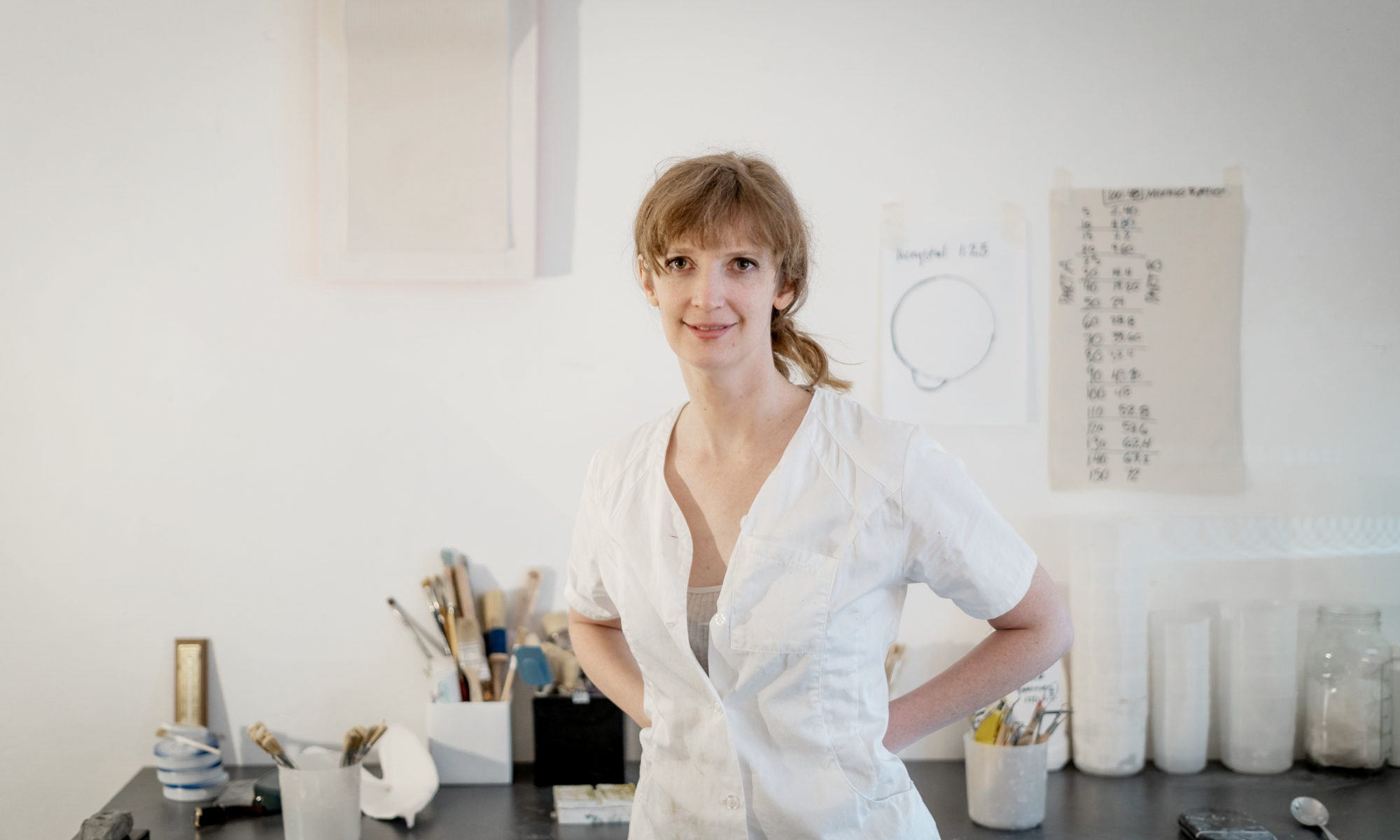

Each casting session is guided personally in the studio – calm, precise, and structured so you can feel at ease throughout the process. Below is a practical overview of how the work unfolds and the materials that may be used.
Preparation
Once a pose has been decided, it is helpful to take body measurements in advance so that an appropriate support structure can be prepared before you arrive. Ideally, body hair should be trimmed very Short. A layer of body cream is applied as a protective barrier.
The Body Casting Process
A thick layer of alginate is applied directly to the body. Alginate is skin-safe, does not pull short hair, and allows for highly detailed surface impressions. This layer is then reinforced with plaster bandages. The procedure usually takes between 30 and 60 minutes.
A discreet support structure is used to ensure comfort while carrying the weight of the materials. For larger casts, 2–4 assistants may support the process to reduce working time as much as possible.
The Cast
The final cast can be produced in different materials, depending on the desired weight, texture, and surface finish:
- Water-based resin reinforced with fiberglass
- Reinforced plaster
- Cast stone with various finishes (e.g. cold-cast metals, stone or marble effects)
Depending on the chosen material, surfaces are carefully refined. I prefer not to over-perfect the form – subtle textures, transitions, and small asymmetries often give the object its presence. The piece is then either finalized or prepared for painting.
Edition Casts / Copies
If a series of copies is desired, the process differs slightly from the initial mold. Liquid clay is poured into the mold, allowed to set, and refined into a precise master form. A latex mold with a support shell is then created.
The final cast can be produced in any of the materials listed above. For larger forms, the support shell is made from acrylic resin reinforced with fiberglass.
Finishing, Painting, Sealing
The chosen casting material may already provide the desired surface quality, or the object can be painted and sealed. High-quality finishes include bath stone, silver-grey granite, natural stone, white marble, yellow sandstone, terracotta, Portland stone, anthracite, classic solid colors, or cold-cast metal using real metal powders.
Most materials can also be painted with water-based paints and sealed upon request.
Time Frame
Drying time is an important factor in the production process. Plaster, for example, must be completely dry before paint can be applied. The average drying time is 2–3 weeks.
Latex molds require more time, as they are built up in layers. The latex must cure before a support shell can be added, and the shell requires at least 24 hours to harden properly.
Most casts require approximately one month until completion. An express service may be request.
Appointments are confirmed with a 50% deposit. Cancellations must be made at least 48 hours before the scheduled session.